Tired of Sharing Your Screen and Worrying What Your Friend Might See?
Tired of sharing your screen and worrying what your friend might see? We’ve all been there—trying to collaborate on a project with a friend, only to feel uneasy about what they might glimpse during a screen recording: a personal message, a private photo, or that unflattering browser tab you forgot to close. It’s stressful. But what if you could share exactly what matters—without the anxiety? I’ve been there too, and after months of testing, I found a way to collaborate freely while keeping my privacy intact. Let me show you how.
The Awkward Moment That Changed Everything
It was late on a Wednesday night, and I was working with my closest friend on a presentation for a community event we were both passionate about. We were laughing, swapping ideas, and getting into a good rhythm. I hit "record" on my screen without a second thought, wanting to capture our brainstorming session so we could review it later. Everything was going smoothly until—pop—an intimate message from my sister appeared in the corner of my screen. It wasn’t inappropriate, but it was deeply personal. The kind of thing you wouldn’t want anyone else seeing, even someone you love.
The moment froze. I saw her eyes flicker toward the notification before she politely looked away. I fumbled to close it, stopped the recording, and tried to laugh it off. But the truth was, I felt exposed. Embarrassed. And honestly, a little shaken. We kept working, but something had shifted. The ease was gone. I became hyper-aware of every open window, every incoming alert. I started pausing constantly, switching tabs, double-checking everything before moving forward. That one little pop-up didn’t just interrupt our flow—it made me question whether screen sharing was worth the emotional cost.
That night, I realized something important: it’s not about trust. I trust my friend completely. But trust doesn’t eliminate the risk of accidental exposure. And that risk? It creates stress. It steals your focus. It makes collaboration feel heavy instead of joyful. From that moment on, I was determined to find a way to share my screen without sacrificing my peace of mind. I didn’t want to stop collaborating—I just wanted to do it smarter.
Why Screen Recording Feels Risky—Even With Friends
You might think, "It’s just my screen—what’s the big deal?" But your screen is more than a display. It’s a window into your daily life. Your email inbox, your calendar reminders, your browser history, the shopping list you forgot to close—these are all tiny pieces of your personal world. And when you hit "record," most tools capture everything. No filters. No warnings. Just a full view of whatever’s on your desktop.
I started paying attention to how often I hesitated before sharing. Was that message from my doctor still open? Did I remember to log out of my bank account? Was there a family photo preview in my file manager? The mental checklist grew longer every time. And the worst part? I wasn’t even working on anything sensitive—I was just living my normal life. But normal life leaves digital traces, and those traces can feel like landmines when you’re sharing.
Here’s the truth: the problem isn’t you. It’s not that you’re disorganized or careless. The problem is that most screen recording tools weren’t built with privacy in mind. They assume you want to capture everything, all the time. But real life doesn’t work that way. We need tools that understand boundaries—tools that let us share purposefully, not blindly. When your tech doesn’t protect your privacy by default, you end up carrying the burden yourself. And that constant vigilance? It’s exhausting. It turns a simple act—like recording a tutorial or sharing a document—into a high-stakes performance.
I realized I didn’t need to be more careful. I needed better tools. Tools that would let me focus on the work, not the worry.
How I Learned to Share Smarter, Not Harder
Instead of avoiding screen recordings altogether—which wasn’t realistic, since they’re so useful for planning, teaching, and collaborating—I decided to explore tools that put privacy first. I spent weeks testing different apps, reading reviews, and asking around in online groups of women my age who also juggle work, family, and creative projects. What I discovered was a game-changer: selective recording.
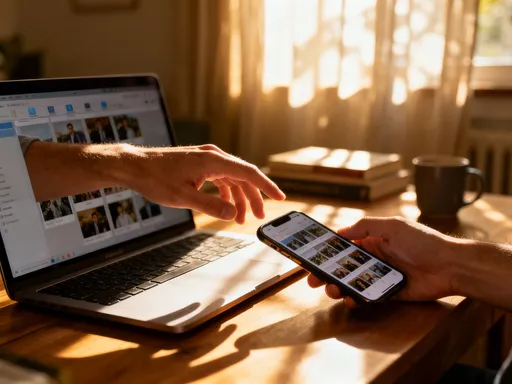
Selective recording means you don’t have to share your entire screen. Instead, you can choose to record just one window, one app, or even a specific section of your screen. For example, if I’m showing a friend how to use a budgeting spreadsheet, I can record only the spreadsheet window. Everything else—my email, my calendar, my open browser tabs—stays completely hidden. No risk. No stress. Just the content that matters.
Some of the apps I tested even have built-in privacy features, like automatic blurring of notifications or the ability to block certain areas of the screen from being recorded. One tool I now use regularly lets me set a "safe zone"—a designated rectangle on my screen that’s the only part captured. Anything outside that box? Invisible in the recording. It’s like drawing a frame around the part of your life you want to share.
But tools alone weren’t enough. I also created a simple routine before any screen-sharing session. I call it my "clean workspace" habit. It takes less than two minutes: I close unrelated tabs, turn on "Do Not Disturb" mode, log out of personal accounts if I’m on a shared device, and sometimes even switch to a guest profile if I’m working on something formal. These small steps, combined with the right app, gave me back control. And with control came confidence. I could finally share without second-guessing every pixel on my screen.
Setting Boundaries Without Saying a Word
One of the things I love most about using privacy-focused tools is that I don’t have to explain myself. I don’t need to say, "Please ignore that email," or "I’ll pause while I switch to another window." The technology sets the boundary for me. It’s silent, seamless, and respectful.
For example, when I’m sharing feedback on a design project with a friend, I use a "view-only" mode. This means she can watch the recording or live screen share, but she can’t click, scroll, or navigate anywhere else. It’s perfect for when I want to guide the experience—showing her exactly what I mean, in the order I want her to see it. No surprises. No accidental clicks into the wrong folder. And no awkwardness.
These features didn’t just protect my privacy—they protected our friendship. Because when you’re not constantly managing discomfort, you can be more present. We laughed more. We stayed in the creative flow longer. And I didn’t feel like I had to perform perfection. I could be myself, share my work, and still feel safe.
It reminded me of how we set physical boundaries in real life—like closing the bathroom door or stepping into another room to take a private call. Those small acts of respect don’t mean we’re hiding; they mean we value comfort and dignity. Digital boundaries are no different. When your tools help you maintain them automatically, it’s not cold or distant—it’s considerate. And that makes collaboration feel warmer, not colder.
Teaching My Friend the Same Rules—Without Making It Weird
After I got comfortable with this new way of working, I invited my friend to try it too. I was nervous at first—what if she thought I didn’t trust her? But I framed it differently. I said, "I found this new way of recording that makes things so much easier. No stress, no awkward moments. Want to try it together?" I didn’t make it about privacy or secrecy. I made it about ease. About making our collaboration smoother and more enjoyable.
We set up the same app on both our devices. I showed her how to select just one window to record, how to mute notifications, and how to use the "safe zone" feature. Within minutes, she was recording her own screen with confidence. And when she shared her recording with me, I could see only the document we were working on—nothing else. It felt clean. Professional. Respectful.
Soon, it became our normal. We didn’t have to talk about boundaries because our tools handled them. It was like developing a shared rhythm—similar to how couples learn each other’s habits in a shared home. We didn’t need rules posted on the fridge; we just knew. And that unspoken understanding made our collaboration even stronger.
The best part? She started using these tools with other friends too. She told me, "It’s not just about privacy—it’s about respect. It shows you care about the other person’s comfort, not just your own." That hit me right in the heart. Because that’s exactly what this is about. It’s not fear. It’s care. It’s not isolation. It’s deeper connection.
The Unexpected Gift: More Focus, Better Work
Once the anxiety around screen sharing faded, something surprising happened: we got better at our work. Without the mental clutter of "what if they see this?" or "did I close that tab?" we could actually focus on the task at hand. Our conversations became more creative. Our decisions came faster. We spent less time backtracking and more time moving forward.
I noticed I was more willing to share early drafts—things I would’ve once hidden until they were "perfect." Why? Because I knew only the content would be seen, not my process. I could be messy, experimental, and real. And that freedom led to better ideas. My friend said the same thing: "I feel like I can be more honest now. I don’t have to hide my learning process."
We also started helping other women in our circle set up the same system. A friend who teaches online classes loved the selective recording feature—she could show her lesson materials without exposing her personal files. Another who runs a small business uses the "view-only" mode to share financial reports with her accountant, keeping everything else private. Each time we showed someone new, it felt like passing on a little gift: the gift of confidence.
What started as a fix for my own anxiety turned into a productivity hack, a creativity booster, and a way to deepen trust. And honestly? It made our friendship more resilient. We weren’t just working together—we were growing together.
Why This Matters Beyond Just Screens
This journey taught me something much bigger than how to record a screen safely. It taught me that privacy isn’t the opposite of connection—it’s the foundation of it. When we feel safe, we show up more fully. We share more honestly. We create more boldly. Technology should support that, not undermine it.
Using tools that respect our boundaries isn’t about building walls. It’s about creating space—space to be ourselves, to make mistakes, to learn, and to grow. When we protect our digital privacy, we’re not hiding. We’re honoring our dignity. And when we extend that respect to others, we build relationships that are not just efficient, but meaningful.
Screen recording became more than a technical skill for me. It became a practice in care—in setting quiet boundaries, in trusting wisely, in choosing tools that align with my values. And that shift? It didn’t just change how I collaborate. It changed how I show up in the world.
So if you’ve ever hesitated before hitting "record," I want you to know: you’re not alone. And you don’t have to choose between connection and privacy. With the right tools and a few simple habits, you can have both. You can share your knowledge, your creativity, your heart—without fear. And when you do, you’ll find that collaboration isn’t just easier. It’s more joyful. More human. And yes, even more beautiful.