Tired of Learning Burnout? This Tech Trick Keeps Me Calm and Focused Daily
You know that overwhelmed feeling when your to-do list grows faster than you can check things off? When studying feels like running in place? I’ve been there—juggling work, personal growth, and life’s surprises. But recently, a simple tech habit transformed my focus. It’s not about working harder. It’s about working *smarter* with tools already in my pocket. Let me share how small changes in how I use everyday technology have made learning feel lighter, more natural, and surprisingly enjoyable. This isn’t about mastering complex software or buying the latest gadget. It’s about shifting how I relate to the tech I already own—my phone, my tablet, the apps I open every day. And honestly, it’s changed everything.
The Daily Crash: When Life Speeds Up and Focus Fades
Remember that beautiful Sunday evening when you sat down with a cup of tea, ready to finally start that online course you’ve been meaning to take? You opened your laptop, clicked play, and within ten minutes, your daughter needed help with homework, your phone buzzed with a group chat, and suddenly, you were back in the thick of it—life, in full motion. By the time you returned, the video had paused, your notes were scattered, and your focus? Gone. We’ve all been there. It’s not that we lack discipline. It’s that life doesn’t wait, and our brains weren’t built to switch gears instantly, especially when we’re juggling family, work, and our own dreams.
For years, I blamed myself. Why couldn’t I stick to a schedule? Why did every learning session end in frustration? I tried planners, sticky notes, alarms—everything. But nothing worked long-term because I was using tools designed for a different kind of life—one with fewer interruptions, more predictability. The truth is, most of us aren’t working 9 to 5 in quiet offices anymore. We’re learning in the margins: during school drop-offs, between laundry loads, in the quiet moments after everyone’s asleep. And yet, we keep expecting ourselves to learn like we’re in college, with four-hour blocks of uninterrupted time. That mismatch is exhausting. It’s not laziness. It’s burnout from trying to force a square peg into a round hole.
And here’s what makes it worse: every time we fail to follow through, we carry guilt. We tell ourselves we should’ve tried harder, stayed longer, focused better. But what if the problem isn’t us? What if it’s the system we’re using? What if we’ve been taught to see learning as something rigid—a linear path where every step must be completed in order, with no room for error or pause? That mindset sets us up for failure in real life, where flexibility isn’t a luxury—it’s a necessity.
The Hidden Link Between Return Policies and Mental Clarity
Now, stay with me here—this might sound strange at first, but bear with me. Have you ever returned something online? Maybe a dress that looked great in the photo but didn’t fit right? Or a kitchen gadget that promised to change your life but just collects dust? What did you do? You clicked a button, printed a label, dropped it in the mail—and life moved on. No guilt. No drama. You simply exchanged it for something better. That’s the beauty of modern return policies: they give us freedom. We don’t have to commit to something just because we tried it once.
But here’s the thing: we rarely give ourselves that same grace when it comes to learning. If a study method doesn’t work—if flashcards bore you, or a video course moves too fast—we don’t think, “Hmm, maybe this isn’t the right fit.” Instead, we think, “I’m not smart enough,” or “I’m just bad at this.” We treat ourselves like broken products instead of flexible humans. What if we applied the same mindset we use with shopping to our personal growth? What if we could say, “This isn’t working—let’s try something else,” without shame?
That shift—from self-blame to system-adjustment—is powerful. It’s not about giving up. It’s about being strategic. Just like you wouldn’t keep wearing shoes that hurt your feet, you shouldn’t keep using learning tools that drain your energy. The mental clarity comes from knowing you’re not stuck. You can pause, adjust, switch, or even walk away—for now—and come back later with a better plan. That’s not failure. That’s wisdom.
How Seamless Exchanges Build Learning Confidence
Let me tell you what changed for me. I used to feel guilty every time I switched note-taking apps. I’d start with one, pour hours into organizing my thoughts, and then—inevitably—realize it didn’t fit my rhythm. Maybe it was too slow, or the interface was confusing, or it didn’t sync well with my other devices. So I’d switch. And then I’d feel bad, like I’d wasted time, like I was flaky or indecisive. But now? I see it differently. I treat it like returning a pair of jeans. If it doesn’t fit, I exchange it. No guilt. No second-guessing.
That small mindset shift—permission to pivot—freed up so much mental space. I stopped seeing each change as a failure and started seeing it as progress. Every switch taught me something about what I actually needed. Maybe I needed voice notes instead of typing. Maybe I needed bullet points instead of long paragraphs. Maybe I needed a calendar that reminded me, not just tracked dates. The point isn’t to find the perfect tool on the first try. It’s to give yourself the freedom to experiment without judgment.
And here’s the beautiful side effect: when you stop pressuring yourself to “get it right,” you actually start making better choices. You become more aware of your habits, your rhythms, your real needs. I started noticing, for example, that I absorb information better in the morning with a podcast while walking, rather than trying to read dense articles at night when I’m tired. So I swapped. I stopped forcing myself to read and started listening. And suddenly, learning felt natural again. It wasn’t about discipline. It was about alignment.
Tech That Adapts to You, Not the Other Way Around
The best technology doesn’t make you change. It changes with you. Think about it: when you start a new job, your email follows you. When you switch phones, your photos, messages, and settings come with you. That’s not magic—it’s design. And that same principle can apply to learning. The right tools should move with your life, not against it.
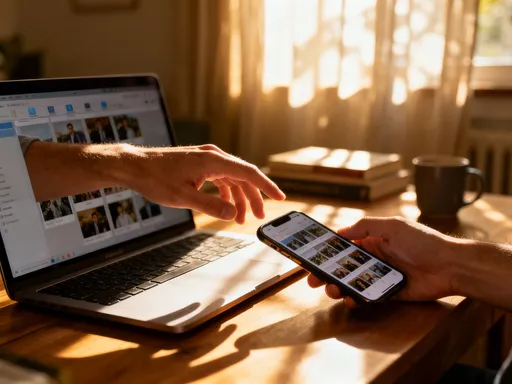
Take cloud-based note apps, for example. I used to write everything in physical notebooks. And yes, they were beautiful. But then I’d be at the grocery store and remember a brilliant idea—only to realize my notebook was at home. Or I’d be halfway through a thought when the kids needed me, and by the time I returned, the idea was gone. Now, I use a simple note app that syncs across all my devices. I can start a thought on my phone, finish it on my tablet, and review it on my laptop. It’s not glamorous, but it works. And that consistency reduces so much friction.
Or consider learning platforms that let you pause, rewind, or speed up videos. Life isn’t linear, so why should learning be? If I’m tired, I slow down. If I’m focused, I speed up. If I need to stop because the dog is barking or the oven timer goes off, I just pause—and pick up exactly where I left off. That’s the kind of flexibility that honors real life. It doesn’t demand perfection. It accommodates reality.
And let’s talk about auto-save. How many times have you lost work because you forgot to save? How many times has that made you avoid starting something new? With auto-save, that fear disappears. You can dive in, explore, make mistakes—knowing your progress is safe. That small feature does more than protect data. It protects your confidence. It gives you permission to begin, even when you’re unsure.
Designing a Personal “Return Policy” for Daily Rhythm Shifts
So how do you build this into your own life? Start by creating your own personal return policy. Here’s how I did it: I asked myself three simple questions. First, “What’s not working right now?” Maybe it’s your morning routine, your study schedule, or the app you use to track goals. Be honest. Second, “What would make this easier?” Maybe you need fewer steps, less typing, or more reminders. Third, “What’s a simple swap I can try today?”
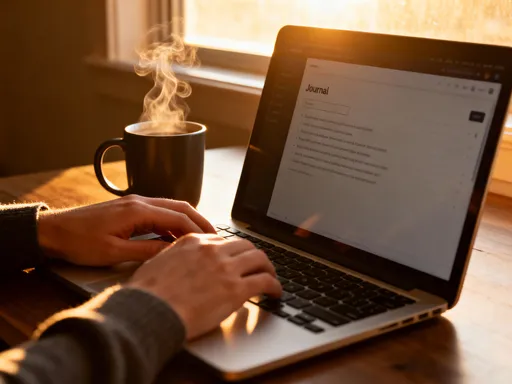
For me, one of the biggest wins was switching from typing notes to using voice memos. I used to dread taking notes because it took so long. But now, if I’m walking, driving, or folding laundry, I just speak into my phone. Later, I listen back and jot down the key points. It’s faster, more natural, and I actually do it. Another swap? I stopped using a rigid daily planner and moved to a digital calendar with color-coded blocks. Work, family time, learning—I can see it all at a glance, and I can drag and drop when plans change. No guilt. No erasing. Just adjusting.
Here’s another tip: set up automatic task migration. Many apps let you schedule reminders or move unfinished tasks to the next day with one tap. That means if you don’t finish your reading tonight, it doesn’t vanish into the void. It follows you—gently, without judgment. That small feature has reduced my anxiety more than I can say. I no longer feel like I’m failing if I don’t complete everything on time. I know I can return to it tomorrow.
The goal isn’t to have a perfect system. It’s to have a forgiving one. One that allows for change, interruption, and growth. When you build that kind of flexibility into your tech habits, you stop fighting yourself. You start flowing.
From Overwhelm to Flow: Real Shifts in Learning Efficiency
When I first made these changes, I didn’t expect much. I thought, “Okay, maybe I’ll save a few minutes here and there.” But what happened was deeper. My focus improved. My motivation returned. I started looking forward to learning again—not as a chore, but as a part of my day, like coffee or a walk. And the best part? I retained more. Because I wasn’t forcing myself to sit still for an hour when I was tired, I was learning in short, focused bursts when I was actually ready.
That’s the power of reducing decision fatigue. Every time you have to choose what to do, when to do it, and how to do it, you use up mental energy. But when your tools are set up to adapt, those decisions get easier. You don’t have to decide when to study—your calendar reminds you. You don’t have to decide how to take notes—your voice memo app is already open. You don’t have to decide whether to continue—your paused video is right where you left it. That freedom to simply *continue* without restarting is huge.
And because I’m not constantly battling my tools, I have more energy for the actual learning. I notice patterns faster. I connect ideas more easily. I even find myself thinking about what I’m learning during quiet moments—while washing dishes, folding clothes, or waiting in the school pickup line. That’s flow. That’s when learning stops feeling like work and starts feeling like part of who you are.
One of my favorite moments was last week. I was listening to a lesson while walking the dog, and suddenly, something clicked—a concept I’d struggled with for days. I stopped, recorded my thought, and later expanded it into a full idea. That wouldn’t have happened if I’d been stuck at a desk, forcing myself to focus. It happened because the tech supported my rhythm, not the other way around.
Building a Life That Learns With You
At the end of the day, this isn’t really about technology. It’s about self-compassion. It’s about giving yourself the same grace you’d give a friend. If your sister tried a new recipe and it didn’t turn out, would you tell her she’s a failure in the kitchen? Of course not. You’d say, “Try again. Maybe swap the spices. Maybe bake it a little longer.” We’re so quick to offer kindness to others—and so slow to give it to ourselves.
By treating learning as something flexible, something you can adjust and refine, you stop seeing yourself as the problem. You start seeing your tools, your routines, your environment as the variables. And that’s empowering. Because variables can be changed. You can’t change who you are—but you can change how you support yourself.
The most powerful tech isn’t the flashiest. It’s the one that works quietly in the background, adapting to your life, holding your progress, and giving you permission to pause, pivot, and return. When you build that kind of support system, learning stops being a battle and starts being a journey—one that moves with you, not against you.
So if you’re feeling overwhelmed, if you’re tired of starting over, if you’re ready to stop fighting yourself—try this: give yourself a return policy. Let go of the idea that you have to do it perfectly. Swap what’s not working. Try something new. And be kind to yourself along the way. Because the truth is, you’re not behind. You’re not failing. You’re learning—just like you always have. And now, with the right tools and the right mindset, you might just enjoy it again.