From Rigid Schedules to Family Flow: How Workday Tools Gave Us Back Our Evenings
Life used to feel like a never-ending tug-of-war between meetings, chores, and missed moments with the kids. I’d come home drained, only to face disorganized dinners and forgotten promises. But everything shifted when I started using workday planning tools not just for tasks—but to protect family time. This isn’t about working more efficiently to climb the corporate ladder. It’s about using simple tech insights to reclaim space for laughter, connection, and shared memories. What began as a small experiment with calendar blocking turned into a quiet revolution in how we live, love, and show up for each other. And honestly? I wish I’d started years ago.
The Breaking Point: When Work Hours Stole Family Time
There was a season when my life felt like a checklist with no finish line. I remember one evening clearly—it was my daughter’s first piano recital. I had promised her I’d be there, front row, camera ready. But a last-minute client call ran long, and by the time I arrived, the performance was over. She stood by the piano, still in her little black dress, trying not to cry. I hugged her, but the disappointment in her eyes stayed with me for weeks. That wasn’t the only time. There were forgotten soccer games, rushed dinners eaten in front of the TV, and conversations with my partner that always started with “I’m so tired.”
At first, I blamed myself. I thought I just needed to try harder, wake up earlier, say no more often. But the truth was, I wasn’t failing—I was just operating without a system. Work didn’t stop at 5 PM because there was no clear boundary between “on” and “off.” Emails followed me into bedtime stories. Calendar invites piled up like unread mail. The guilt was constant: guilt for not being present with my family, guilt for not delivering at work. I felt stretched thin, like I was giving my best energy to everyone except the people who mattered most.
What I didn’t realize then was that this wasn’t a personal failing—it was a design flaw. Our days weren’t structured to protect what we valued. We had systems for work tasks, but none for family moments. The tools I used to manage deadlines and meetings weren’t being used to guard the things that brought us joy. That realization hit me one Sunday morning, watching my son build a Lego tower alone while I answered emails on the couch. I thought, This can’t be how it always is. Something had to change—not just my habits, but the way I thought about time itself.
Discovering the Shift: Workday Tools as Unexpected Lifesavers
The turning point came during a particularly chaotic week. I was using a popular productivity app to track my work projects, but I kept missing personal commitments. One morning, I blocked a 30-minute window in my calendar labeled “Call pediatrician.” It was a small task, but when the alert popped up, I actually did it—right then. No forgetting, no rescheduling. That tiny win made me wonder: What if I used this same tool for family things? So I tried something radical: I blocked my calendar for school pickup. Not as a reminder, but as a real appointment—same priority as a team meeting.
At first, it felt strange. Was I really scheduling time with my own kids? But within days, the shift began. When a colleague asked me to join a late call, I could say, “I can’t—my calendar’s blocked for family time.” No guilt, no over-explaining. And when I walked into the classroom on time, my daughter’s face lit up. “You’re here early!” she said. That moment—small, quiet, ordinary—was everything. I realized these tools weren’t just for work. They could be guardians of the life I wanted to live.
I started adding more: “Dinner with family,” “Game night,” “Walk with husband.” I used color-coding so I could see at a glance how much personal time was protected. I set recurring events for weekly pizza nights and monthly coffee dates with my sister. The app didn’t just help me remember—it helped me honor these moments. And slowly, something unexpected happened: I became more present. I stopped mentally rehearsing emails during bedtime stories. I laughed more at the dinner table. The tools didn’t add more hours to the day, but they helped me use the hours I had with more intention.
Flexibility Over Perfection: Redefining What Productivity Means
One of the biggest myths about productivity is that it’s about doing more, faster, with less effort. But for someone juggling work and family, that definition falls short. True productivity, I’ve learned, isn’t about checking off every box—it’s about creating space to breathe, to connect, to be human. When I first started using task batching—grouping similar tasks like emails or calls into dedicated time blocks—I worried it would feel robotic. Instead, it freed up mental energy I didn’t even know I was wasting.
Before, my brain was a browser with 50 tabs open. I’d start an email, then remember a grocery item, then worry about a school permission slip, then get interrupted by a Slack message. Now, I have specific times for specific things. Emails from 9 to 10 AM. Errands scheduled on Tuesday afternoons. This doesn’t mean I never deviate—but now, when I do, it’s a choice, not a crisis. When my son had a sudden fever during a work block, I could pause, care for him, and reschedule my tasks without panic. The system held me, so I could hold him.
Focus timers—like the Pomodoro technique—also changed how I worked. Twenty-five minutes of deep work, followed by a five-minute break. At first, I thought it was too structured. But I quickly noticed I was getting more done in less time. And those short breaks? I started using them to send a quick text to my partner, read a page of a book with my daughter, or just stretch. The rhythm gave me energy instead of draining it. I wasn’t just working smarter—I was living better. Productivity, I realized, isn’t about control. It’s about creating the conditions where love and life can thrive.
Syncing Lives, Not Just Calendars
Family life isn’t a solo act—it’s a collaboration. And one of the most powerful changes came when my husband and I started using a shared digital calendar. Before, I was the family’s unofficial scheduler, constantly reminding everyone of appointments, practices, and deadlines. It wasn’t fair, and it wasn’t sustainable. Now, we both have access to the same view. When I block “Dentist - Emma” on Wednesday at 4 PM, he sees it instantly. When he adds “Parent-Teacher Conference” on Friday, I get a notification.
The shift wasn’t just logistical—it was emotional. We stopped the cycle of “Why didn’t you tell me?” and “I thought you were handling that.” Instead, we started saying things like, “I saw you scheduled the flu shots—thanks for taking care of that,” or “I’ve got bedtime covered Thursday, so you can have a quiet evening.” The app didn’t replace communication—it made it better. We weren’t nagging; we were supporting. We weren’t guessing; we were aligned.
We also started using a shared task app for household chores. No more sticky notes on the fridge or last-minute scrambles. Groceries? Added to the list by whoever notices we’re out of milk. Birthday gifts? Assigned with due dates. It sounds simple, but the impact was profound. I no longer felt like the only one holding the mental load. We were a team, not just in name, but in action. And when our son turned ten, we used the app to plan his surprise party together—assigning tasks, tracking RSVPs, even scheduling “cake prep” as a family event. The party was joyful, but the real gift was how we got there: in sync, stress-free, and smiling.
Building Rituals in the Gaps
Some of my favorite family moments happen in the in-between times—the quiet spaces that used to get filled with chaos or scrolling. When we first started using planning tools, I worried they’d make life too rigid, like we were scheduling every laugh. But the opposite happened. Structure didn’t kill spontaneity—it protected it. Because we weren’t constantly reacting to emergencies or forgotten commitments, we had room for small, meaningful traditions.
Friday nights became movie night. We pick a film, make popcorn together, and the kids can stay up a little later. Sunday mornings are for pancakes and “share your week” talks—where each of us says one thing we loved and one thing that was hard. Before bed, we do a quick gratitude circle: “I’m thankful for…” It’s not fancy, but it’s ours. And because these moments are protected in our calendar—labeled “Family Ritual” in soft blue—they’re less likely to be overwritten by work.
What’s beautiful is how these rituals create their own rhythm. My daughter now asks, “Is it pancake Sunday?” on her way to the kitchen. My son runs to the living room after dinner on Fridays, ready to claim the best seat. These aren’t grand gestures, but they’re the glue of our family. They’re where we reconnect, where we listen, where we remember who we are. And they only exist because we planned for them. The lesson? Spontaneity thrives when it has a home.
Tech as a Bridge, Not a Barrier
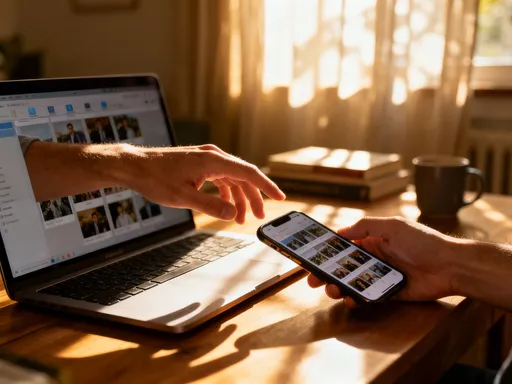
I used to worry that using technology for family life would make us more distant—more focused on screens than on each other. But I’ve learned that tech isn’t the problem; it’s how we use it. When I get a notification that it’s my nephew’s birthday, I send a voice message instead of just a text. When my mom shares a photo album from our beach trip, I open it at dinner and we all pass the tablet around, laughing at the goofy faces we made. These aren’t distractions—they’re connections.
One of my favorite features is milestone alerts. I set them for things like “First day of school,” “Dance recital,” and “Dad’s anniversary.” When they pop up, I take a moment to acknowledge them—sometimes with a card, sometimes with a special dinner. It’s not about perfection; it’s about presence. And turning off work mode has become a ritual. At 6 PM, I close my laptop, silence work notifications, and say out loud, “I’m here now.” My kids hear it. My husband hears it. It’s a signal that I’m not just physically present—I’m emotionally available.
Tech, when used with intention, doesn’t replace real life—it enhances it. It helps us remember what matters, show up with care, and create more of the moments we’ll one day look back on with warmth. It’s not about living through screens. It’s about using tools to live more fully in the world we love.
A Life Rebalanced: What We’ve Gained Beyond Time
Looking back, the biggest change wasn’t in my calendar—it was in my heart. I used to think I had to choose between being a good professional and a present parent. But these tools helped me see that I didn’t have to sacrifice one for the other. I’ve gained more than hours; I’ve gained peace. I’ve gained the ability to look my children in the eyes without my mind racing to the next task. I’ve gained deeper conversations with my partner, longer hugs, and more genuine laughter.
Work hasn’t disappeared. There are still busy weeks, last-minute changes, and days when things don’t go as planned. But now, I have a system that bends without breaking. I can adjust, adapt, and still protect what matters. The tools didn’t fix everything—but they gave me the clarity to design a life that feels more like mine. I’m not just surviving the day; I’m savoring it.
If you’re feeling stretched thin, overwhelmed by the juggle, I want you to know: it’s not just you. And it’s not your fault. But it can be different. You don’t need a complete overhaul—just one small change. Try blocking one family moment in your calendar this week. See what happens when you treat it like a real appointment. You might be surprised how much a little intention can do. Because at the end of the day, it’s not about doing more. It’s about being there. And that’s the most important work of all.