How I Retrained My Brain to Sleep Naturally — No Pills, Just Progress
Ever lie awake for hours, watching the clock creep toward dawn? I’ve been there — stuck in the exhausting cycle of insomnia, desperate for real rest. After years of failed fixes, I discovered rehabilitation training that actually works. It’s not magic — just science-backed methods that reset your sleep rhythm. This is how I reclaimed my nights, one small change at a time. What began as a nightly battle turned into a journey of understanding my body, rewiring my habits, and restoring a natural sleep pattern without medication. The transformation wasn’t overnight, but it was real, lasting, and deeply personal. If you’ve ever felt trapped by sleeplessness, this is for you.
The Breaking Point: When Insomnia Took Over
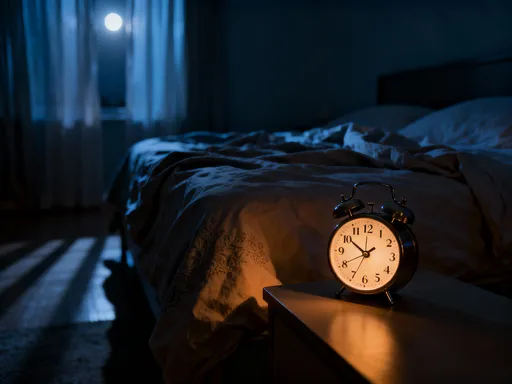
For over three years, sleep felt like a distant memory. I would climb into bed at a reasonable hour, convinced tonight would be different, only to lie there — motionless, mind racing — as the minutes bled into hours. The digital clock mocked me: 1:17, then 2:43, then 4:02. By the time I finally drifted off, dawn was breaking, and my alarm was moments away. I existed in a fog, dragging myself through workdays with coffee in one hand and sheer willpower in the other. Concentration evaporated. Simple tasks felt overwhelming. My mood swung unpredictably — short-tempered one moment, tearful the next. I wasn’t just tired; I was emotionally and mentally worn thin.
The physical toll was just as real. My body ached without explanation. I caught every cold that went around the office. My skin looked dull, my hair thinner. I stopped enjoying things I once loved — long walks, reading, even time with family — because I was too exhausted to engage. Weekends offered no relief. I’d sleep in, hoping to catch up, only to feel groggy and disoriented, as if I’d been drugged. The more I tried to fix it — napping, drinking herbal tea, turning off screens — the more elusive real rest became. I felt trapped in a cycle I couldn’t control.
What made it worse was the shame. I’d hear people say, “Just relax,” or “A glass of warm milk helps me,” and I’d feel guilty for not being able to do something so simple. I began avoiding social plans, afraid I’d fall asleep at dinner. I stopped traveling, fearing unfamiliar beds would make things worse. Sleep, something every living creature needs, had become my greatest enemy. The turning point came one Tuesday morning, standing in front of the bathroom mirror, staring at my reflection — pale, hollow-eyed, defeated. I realized I couldn’t keep living this way. I needed a real solution, not another quick fix that failed by Thursday. That day, I committed to understanding my insomnia — not as a flaw, but as a pattern I could change.
Understanding Insomnia: More Than Just “Can’t Sleep”
For years, I thought insomnia was just about not being able to fall asleep. I didn’t realize it was a complex condition involving both behavior and biology. True insomnia isn’t simply lying awake occasionally — it’s a persistent difficulty falling asleep, staying asleep, or waking too early, despite having the opportunity and environment to sleep well. It’s not about being busy or stressed for one night; it’s a recurring pattern that disrupts daily functioning and overall health. The American Academy of Sleep Medicine defines chronic insomnia as occurring at least three nights a week for three months or more. By that standard, I was well within the diagnosis — and so are millions of others, most of whom suffer in silence.
What I didn’t understand at first was how much of insomnia is learned. The brain is incredibly adaptable, and over time, it can form negative associations with the bed and bedtime. Instead of signaling rest, your bedroom becomes linked with anxiety, frustration, and wakefulness. You climb in, and immediately your mind races: Did I reply to that email? What if I don’t sleep tonight? How will I function tomorrow? This mental loop strengthens with repetition, turning sleep into a performance you feel you’re failing. The bed, once a place of comfort, becomes a stage for mental struggle.
At the same time, two key biological systems are thrown off balance: sleep drive and circadian rhythm. Sleep drive is the body’s natural pressure to sleep, which builds the longer you’re awake. When you’re sleeping poorly, this drive gets disrupted — especially if you nap during the day or sleep in. Circadian rhythm is your internal 24-hour clock, regulated by light and darkness. When this rhythm is misaligned — due to irregular schedules, late-night screen use, or lack of morning light — your body loses its natural cues for when to be alert and when to rest. The result is a double disruption: your biology isn’t primed for sleep, and your mind is trained to expect wakefulness. But here’s the hopeful truth: because insomnia is often a learned pattern, it can be unlearned. It’s not a life sentence. With the right approach, the brain can be retrained.
Why Quick Fixes Fail — And What Actually Works
Like many people, I tried every shortcut imaginable. I downloaded sleep apps that promised soothing sounds and brainwave entrainment. I drank chamomile tea, took melatonin, even tried weighted blankets. Some offered fleeting comfort, but none delivered lasting change. The real problem wasn’t that I lacked tools — it was that I was using them incorrectly. Most quick fixes target symptoms, not causes. They may help you drift off one night, but they don’t address the underlying habits and associations that keep insomnia alive.
Take sleeping in, for example. It feels like recovery, but it actually weakens your sleep drive. When you extend your time in bed, you dilute the pressure to sleep, making it harder to fall asleep the next night. The same goes for daytime naps — especially long or late ones. They may relieve afternoon fatigue, but they rob your body of the accumulated sleep pressure needed for deep, restorative nighttime sleep. Alcohol is another common trap. While it may make you drowsy at first, it disrupts sleep architecture, reducing REM sleep and increasing nighttime awakenings. You may fall asleep faster, but the quality is poor, leaving you unrested.
Then there are sleep trackers and apps. While they can raise awareness, they often backfire. Checking your sleep score each morning can turn rest into a performance metric, increasing anxiety. “Only 5 hours? I’ll never survive today.” This kind of thinking reinforces the very stress that keeps you awake. The real solution isn’t more gadgets or temporary remedies — it’s rehabilitation. Cognitive Behavioral Therapy for Insomnia (CBT-I) is the gold standard, supported by decades of research. It doesn’t promise instant results, but it offers a structured, evidence-based path to retrain your brain. The core idea is simple: consistency over intensity. Small, daily actions — repeated with patience — reshape your relationship with sleep. It’s not about perfection; it’s about progress.
Core Principle #1: Sleep Restriction — Resetting Your Sleep Efficiency
Sleep restriction was the first method that truly shifted my pattern. It sounds counterintuitive — reducing time in bed to improve sleep — but it works by increasing sleep efficiency. The idea is to match your time in bed more closely with your actual sleep time. If you’re spending eight hours in bed but only sleeping five, you’re reinforcing wakefulness. By limiting your time in bed, you build up sleep pressure, making it easier to fall asleep and stay asleep. Over time, this strengthens the association between bed and sleep.
Here’s how I started: I tracked my average sleep duration over a week. It was about five hours and twenty minutes. I rounded that to five and a half, and that became my initial time in bed. I set a strict wake-up time — 6:30 a.m., no matter what — and counted backward to determine my bedtime: 1:00 a.m. That meant no lying in bed hoping to fall asleep at 10 p.m. I had to wait until 1:00 a.m. to get in. The first few nights were hard. I was tired, but I stayed out of bed. When I finally climbed in, I fell asleep faster than I had in years. There were still awakenings, but the overall sleep quality improved.
After a week, I assessed my sleep efficiency — the percentage of time in bed actually spent sleeping. Once it consistently stayed above 85%, I added fifteen minutes to my sleep window. I moved bedtime to 12:45 a.m. I repeated this process every week or so, gradually expanding my time in bed as my efficiency remained high. It took patience. Some nights were still restless, but the trend was upward. I wasn’t chasing sleep anymore; I was building it systematically. The key was consistency — same wake-up time every day, even on weekends. This anchored my circadian rhythm and made the gains stick. Sleep restriction isn’t about deprivation; it’s about precision. It teaches your body that when you’re in bed, it’s for sleep — not for lying awake, worrying.
Core Principle #2: Stimulus Control — Rebuilding the Bed = Sleep Link
If sleep restriction strengthens sleep drive, stimulus control repairs the mental connection between bed and rest. For years, I had used my bed for everything except sleep: scrolling through my phone, reading, working, even eating. Over time, my brain learned to associate the bed with alertness, not relaxation. Stimulus control breaks that cycle by redefining the bed as a place for sleep only.
The rules are clear: use the bed only for sleep and intimacy. No phones, no books, no laptops. If you’re not asleep within about 20 minutes, get out of bed and go to another room. Do something quiet and calming — read a physical book (not on a screen), fold laundry, sip herbal tea — until you feel sleepy. Then return to bed. Repeat as needed. At first, this felt frustrating. I’d get up, sit in the living room, and wonder if I’d ever sleep again. But over time, something shifted. My brain began to expect sleep when I climbed into bed. The anxiety of lying awake diminished because I knew I could leave if needed. The bed became a cue for rest, not stress.
Creating a transition routine helped. I developed a signal that bedtime was approaching. About an hour before my scheduled time, I’d dim the lights, put my phone in another room, and do light stretches or write in a journal. This wasn’t about rigid rules — it was about sending gentle signals to my body: “We’re winding down now.” The space around the bed also mattered. I made sure my bedroom was cool, quiet, and comfortable. I invested in blackout curtains and a white noise machine. These weren’t luxuries; they were part of rebuilding a sleep-conducive environment. Stimulus control works because it interrupts the cycle of frustration. Instead of lying in bed feeling like a failure, you take action — calmly, deliberately — and reclaim control.
Supporting Habits: Light, Movement, and Wind-Down Routines
While sleep restriction and stimulus control are the foundation, daily habits play a crucial supporting role. Light is one of the most powerful regulators of circadian rhythm. I made it a habit to get natural light within an hour of waking. Even on cloudy days, stepping outside for ten or fifteen minutes helped reset my internal clock. This morning light exposure suppressed melatonin, the sleep hormone, and promoted alertness during the day — which, paradoxically, improved nighttime sleep. In the evening, I did the opposite: I reduced artificial light, especially blue light from screens. I used warm-toned bulbs and enabled night mode on devices, but the real change was putting screens away at least an hour before bed.
Physical activity also made a difference, but timing mattered. I started walking daily, usually in the morning or early afternoon. Exercise boosted my energy and mood, and it strengthened my sleep drive. But I avoided intense workouts close to bedtime, as they could be stimulating. Even light yoga or stretching in the evening helped me unwind without overactivating my nervous system. Movement wasn’t about intensity; it was about consistency and alignment with my body’s natural rhythms.
Wind-down routines became non-negotiable. I stopped treating bedtime like an afterthought. Instead, I created a buffer zone — a 60- to 90-minute period dedicated to slowing down. This wasn’t about elaborate rituals; it was about consistency. I might take a warm bath, listen to soft music, or jot down thoughts in a notebook to clear my mind. Journaling was especially helpful. Writing down worries or to-do lists kept them from circling in my head at night. The goal wasn’t to eliminate thoughts, but to acknowledge them and set them aside. These habits didn’t guarantee sleep, but they created the conditions for it. They told my body: “It’s safe to rest now.”
Tracking Progress and Staying on Track
Progress wasn’t linear, and that was okay. There were weeks when everything clicked — I fell asleep quickly, stayed asleep, woke refreshed. Then life happened: a stressful work project, a family event, a travel day. My sleep would dip, and old fears would creep in. “Have I ruined everything?” I learned to view setbacks not as failures, but as part of the process. Insomnia rehabilitation is a skill, like learning to play an instrument. You improve with practice, but you don’t expect perfection every day.
Tracking helped me see the bigger picture. I kept a simple sleep diary — noting bedtime, wake time, estimated sleep duration, and overall quality. I didn’t obsess over the numbers, but I reviewed them weekly to spot trends. Over time, the graph tilted upward. The nights of poor sleep became less frequent, and recovery was faster. What mattered most was consistency in my routine, not any single night’s outcome. If I traveled and my schedule shifted, I returned to my anchor — the fixed wake-up time — as soon as possible. This kept my rhythm from derailing completely.
Self-compassion was essential. I stopped berating myself for bad nights. Instead, I asked: “What can I learn from this?” Maybe I’d had caffeine too late, or skipped my wind-down routine. I adjusted without judgment. I also reminded myself that sleep isn’t the only measure of a good day. Energy, mood, and focus all improved, even on nights when sleep wasn’t perfect. The goal wasn’t perfection — it was resilience. Over time, I developed a deeper trust in my body’s ability to rest. I no longer feared the night. I prepared for it, respected it, and allowed it to unfold naturally.
Conclusion: Sleeping Better, Living Better
Retraining my brain to sleep naturally wasn’t easy, but it was one of the most transformative things I’ve ever done. It wasn’t about finding a miracle cure — it was about building sustainable habits, one night at a time. Today, I still follow the core principles: a consistent wake-up time, stimulus control, and attention to light and routine. Sleep isn’t perfect every night, but it’s no longer a source of fear or frustration. I fall asleep faster, stay asleep longer, and wake feeling more refreshed. The benefits ripple through every part of my life — my focus is sharper, my mood more stable, my energy more reliable.
What I’ve learned is that sleep is not a luxury — it’s a foundation. When you sleep better, you live better. You’re more present with your family, more productive at work, more resilient in the face of stress. The methods I used — sleep restriction, stimulus control, and lifestyle adjustments — are not quick fixes. They require patience, consistency, and a willingness to change long-standing habits. But they are effective, science-backed, and accessible to anyone willing to try.
If you’re struggling with sleep, know that you’re not broken. You’re not alone. And you don’t have to live this way forever. Start small. Pick one habit — maybe setting a fixed wake-up time, or leaving your phone out of the bedroom — and stick with it. Progress builds on itself. Be kind to yourself. Celebrate small wins. And if you need support, reach out to a healthcare provider or sleep specialist. Rehabilitation training isn’t a cure-all, but it’s a proven path toward lasting sleep health. Your nights don’t have to be a battle. With time and effort, they can become a sanctuary of rest — just as nature intended.